
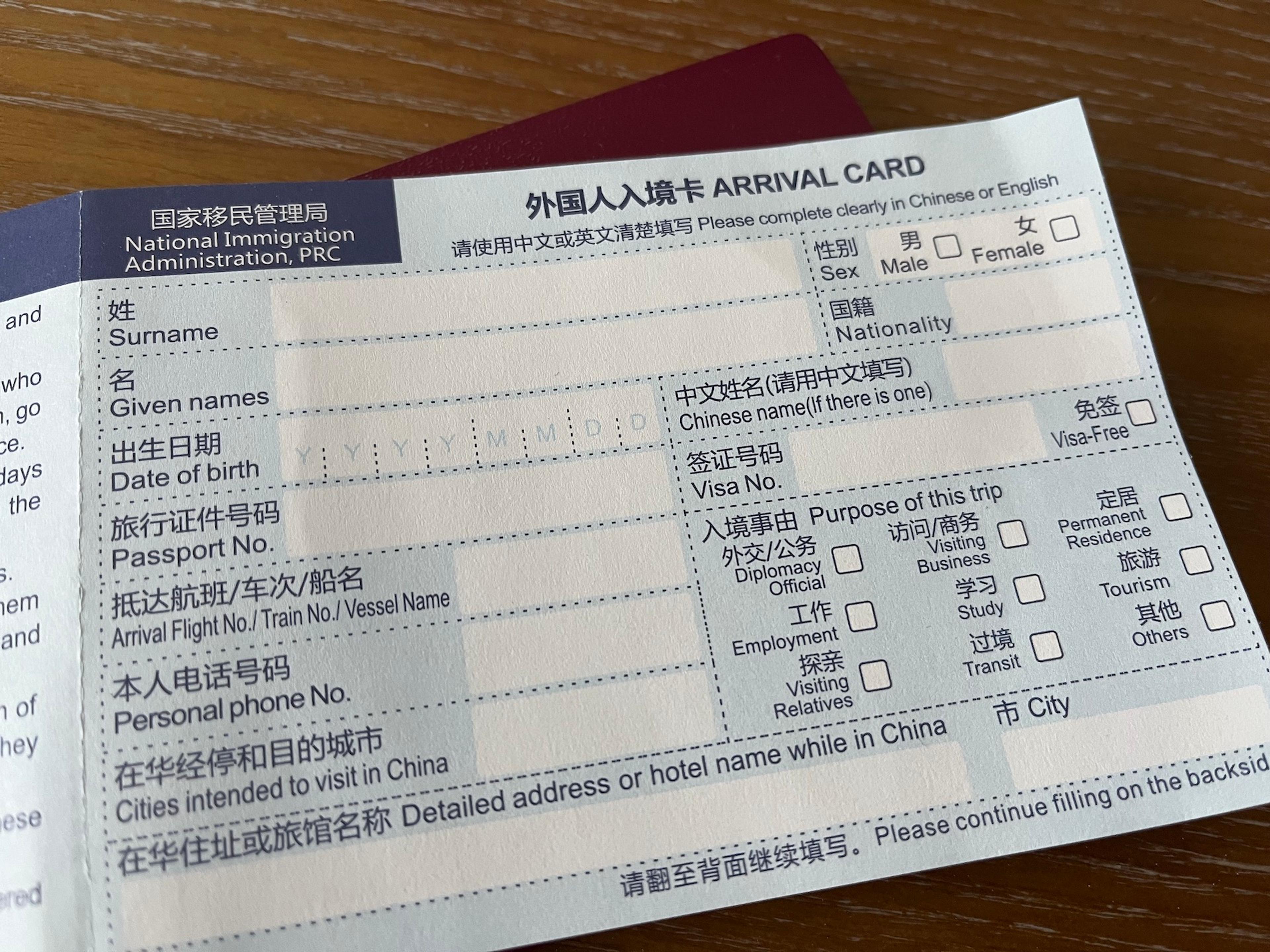
Understanding Travel Documentation: Arrival Cards
Arrival cards have been part of international travel for decades. Long before modern airports, governments needed ways to record who was entering their territories. Passenger ships arriving at ports were required to provide passenger manifests (lists of the people on board), creating some of the earliest organized records of international arrivals. In the United States, for instance, federal passenger arrival records date back to 1820.

As international air travel grew, the need to manage and simplify the movement of passengers across borders grew with it. For a while, the flight crew would hand out paper landing cards on flights before arrival to certain destinations. Today, that paper slip has largely disappeared, replaced in many destinations by a digital form that you complete before arrival and, in some cases, access through a QR code. That slip, or its digital replacement, is called an arrival card, and understanding it can save you from stressful moments at immigration.
Details Captured on an Arrival Card:
Depending on the destination, an arrival card asks for details such as:
- -Full name, nationality, and date of birth
- -Passport number and expiry date
- -Flight or vessel number
- -Purpose of visit (tourism, business, study, family visit, etc.)
- -Length of stay and address while in the country
- -Health declarations (past illnesses, vaccination status, recent travel history)
- -Customs declarations (goods, cash, or food being brought into the country)
Some countries require a card per traveler, others allow one card per family, and some only require them from non-citizens or non-residents. In many places, the arrival card is combined with a customs declaration, so you're completing both border-entry and customs formalities in a single form.
What are arrival cards actually used for?
Airlines increasingly transmit passenger information to governments before the aircraft arrives. IATA says more than 100 countries now require airlines to send API (Advance Passenger Information) before flight arrival. But even where airlines transmit passenger information in advance, some countries still require travelers to complete an arrival card for purposes such as:
Immigration and border control
The primary purpose is to give immigration authorities additional information about the traveler. For example, knowing that someone is visiting for tourism and will be staying at a particular hotel gives an immigration officer information that isn't necessarily available from simply looking at a passport.
Establishing a record of entry

An arrival card can create an administrative record that a person entered the country. Historically, this was particularly important because paper documentation was one of the main ways governments could track international arrivals.
These historical immigration records can also become extraordinarily valuable to historians and families researching their history.
Public health
Some arrival cards have included questions relating to health, particularly during periods of infectious disease outbreaks. This became particularly visible during the COVID-19 pandemic, when many countries introduced or expanded health declarations and passenger locator forms.

A Snapshot of Countries that Require Arrival Cards in 2026
- Thailand — Thailand Digital Arrival Card (TDAC)
- Singapore — SG Arrival Card (SGAC)
- Malaysia — Malaysia Digital Arrival Card (MDAC)
- Vietnam — Digital Arrival Card / Pre-Arrival Declaration
- Indonesia — Electronic customs and health declarations
- Australia — Incoming Passenger Card (IPC)
- New Zealand — New Zealand Traveler Declaration
- India — e-Arrival Card
- South Korea — Korea e-Arrival Card
- The Bahamas — Digital Immigration and Customs Arrival Card
In Closing
Before a country welcomes you in, it needs to know a little more about who you are, where you have come from and why you are there. The best approach is simple: prepare your documents early, keep your travel details accessible, read every question carefully, answer honestly, and always check the latest entry requirements beforehand.
For our travelers at Kendirita, we have a team dedicated to making travel as seamless as possible. While immigration rules may vary from country to country and can change without notice, our team is always kept apprised. Simply reach out to us, and we’ll guide you through arrival cards, visa requirements and the travel documentation you need for your journey.
Writer: Winnie Wekesa
